Equal opportunities
In the morning the participants set out to explore equal opportunities and the differences between people. They began with an exercise designed to highlight the differences between people in the group. Buzz asked the group to form a circle and each person in turn was asked to step forward and say something unique about themselves (eg. I am the only member of the Green Party.) If anyone else in the group matched with the statement they also had to step forward and the person had to try and think of something else unique about themselves.

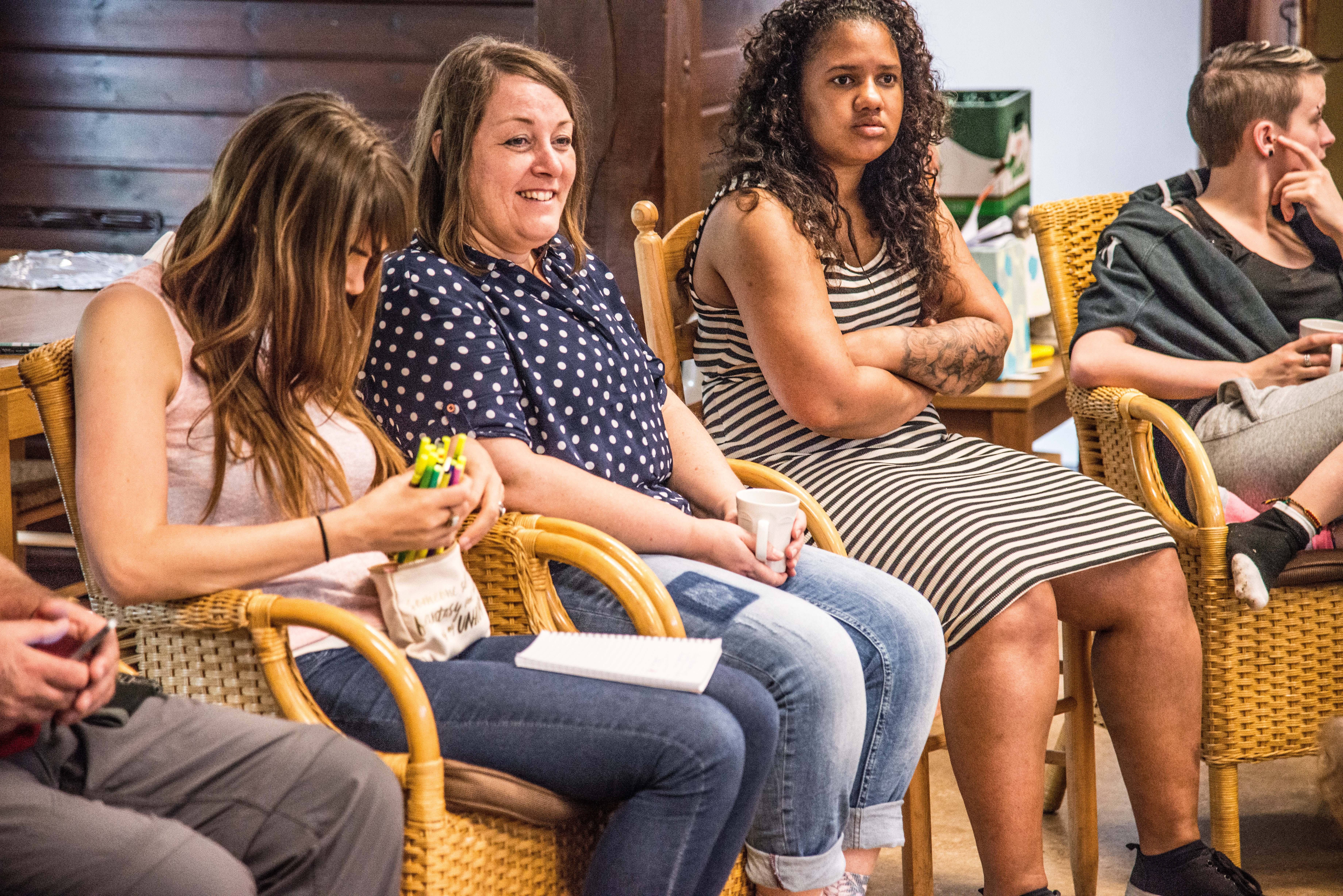
Next they were asked to consider what they needed and wanted to know about different people in their lives. Buzz divided these into four categories; young people, colleagues, friends and personal interests. Working in their mentor groups they thought about whether they needed to know things like age, relationship status, religious beliefs and sexual orientation. The participants then came back together to discuss what they had found. Some people felt they needed to know lots of things about some groups and less about others.

Finally Buzz did a roleplay with Gemma around sexual orientation. He asked Gemma a series of personal questions that are often asked of gay people but reversed it so they were aimed heterosexuals. Some of the questions were things like…
- What do you think caused your heterosexuality?
- Do you think your heterosexuality is a phase?
- How do you know you are heterosexual if you haven’t been with someone of the opposite gender?
- When and where did you decide that you were heterosexual?

At the end of the roleplay the group discussed things to think about when asking questions of young people. For example asking a female young person if they have a boyfriend is an assumption that they are heterosexual. A more natural question might be “are you in a relationship?”
Placements
Before lunch the participants were asked to think about their placements once again. ?? asked the group how they secured their placements. Some of them said that they had been in the right place at the right time to arrange them or that there was luck involved. Steve pointed out to the group that they had probably used some of Covey’s habits, such as being proactive, in order to arrange their placement.

The participants were asked to work in their mentor groups to imagine they were planning a two hour session in an open youth club. They had ten minutes to plan the session and then were to come back together to the larger group to present their planned activity. The participants gave feedback to each group in turn, discussing things such as unexpected complications, allowing for the differing needs of people in the group and how to fund their activity.
The exercise was designed to help prompt them to think about how their can refine their session planning using the PDCA method from earlier in the week.

Covey’s sixth habit – Synergy
After lunch the group came back together to start thinking about Covey’s sixth habit – synergy. Buzz shared with the group four sets of animals: rhino and birds, geese, ants and shark and small fish. He asked them to pick one of the sets and make the noise of that animal, after this they formed small group with the other people making their animal sounds.

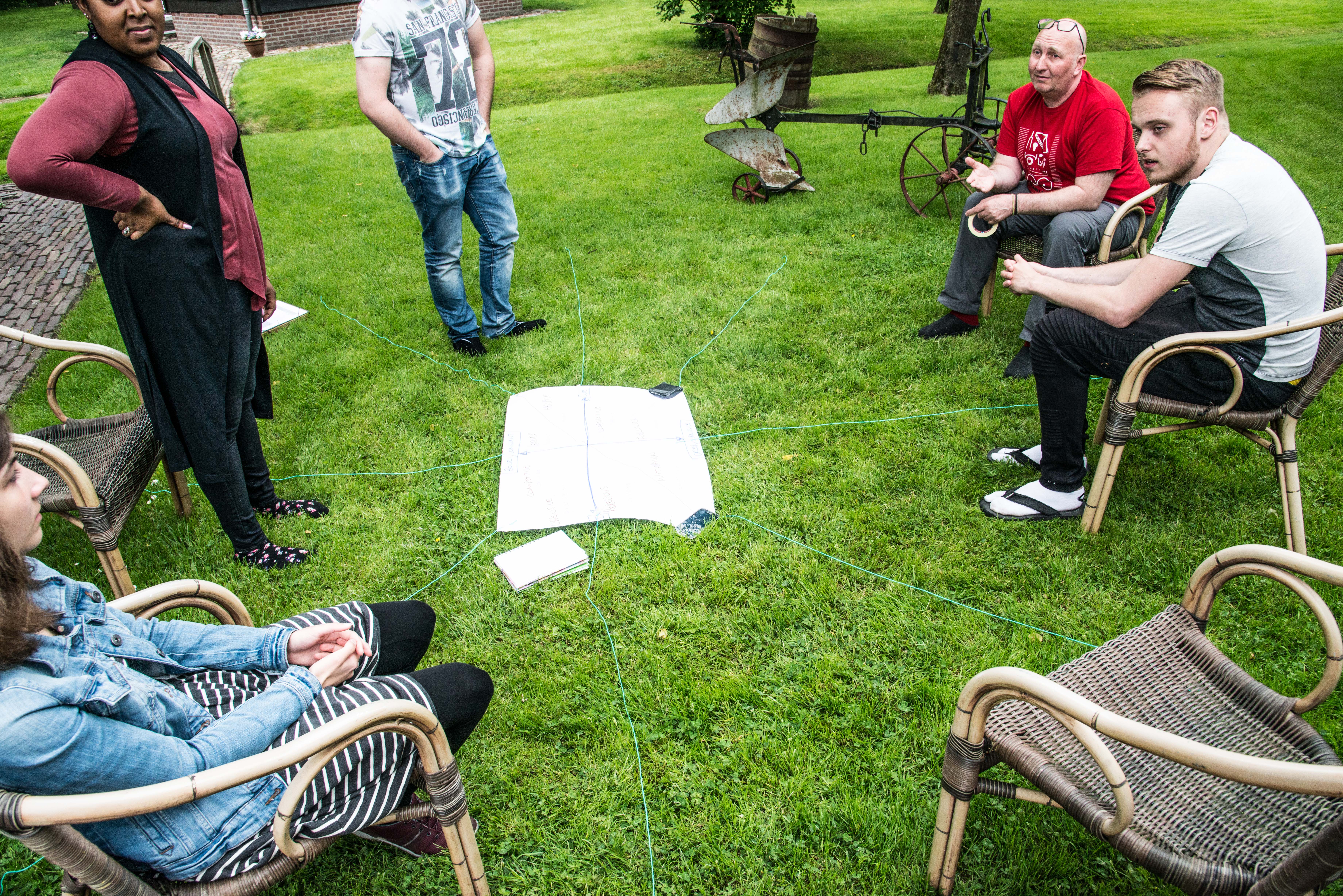
In their groups they came up with five good things about their animal’s collaboration. Next he asked them to think about the differences between the animals – some have collaborations with their own species and some with other animals. Each team was also given a statement and prepared a description of synergy. The statements were…
- Disagreements if treated in the right way can only bring rewards
- Differences will always give more opportunity
- Thinking beyond the known (gnome) will allow you to look for the new
- Embracing different perspectives is what will bring you together

Speaking about synergy Covey said:
Something which underpins synergy is the strengths and benefits of difference in a group.
After creating their descriptions of synergy the group used the law of attraction to form into pairs. Buzz asked them to identify the uniqueness within their pairs and find out the differences between them. They had to find one thing that they fundamentally disagree on and to consider what the benefits are that come from their different opinions, beliefs and values.